
English :
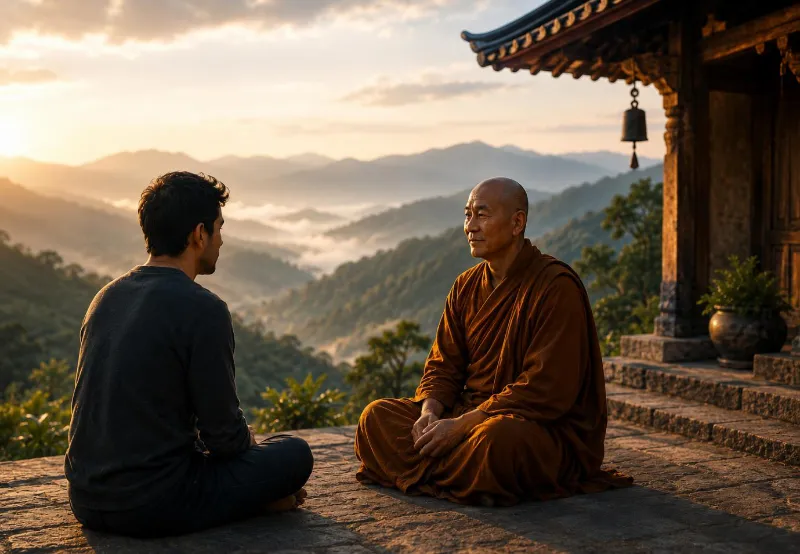
A man, exhausted from the noise of everyday life, decided to spend a few days at a Buddhist monastery deep in the mountains. His life looked fine from the outside a stable job, responsibilities fulfilled, people around him yet inside, he constantly felt restless. His mind was always fighting something: stress at work, delayed plans, difficult people, disappointments, and fears about the future.
He hoped the silent retreat would give him peace.
For several days, he lived in silence. No phone. No meetings. No distractions. He woke up before sunrise, meditated with the monks, ate simple meals, and spent long hours sitting quietly with his thoughts. Slowly, his mind became calmer. The constant noise inside him started fading.
When the retreat ended, he noticed he felt lighter and more peaceful than before. But deep down, he still felt that one important question remained unanswered.
Before leaving, the head teacher told him: “You may speak to one monk before you go. Ask whatever you wish.”
The man thought carefully. Of all the questions in his heart, one stood out the most.
He asked, “How do you truly find peace?”
The monk smiled gently and replied: “I say yes. To everything that happens, I say yes.”
The man was confused. He expected a deep spiritual explanation, a complicated philosophy, or a secret meditation technique. But the monk simply bowed and walked away.
During his journey back home, the words stayed in his mind.
“I say yes.”
At first, he did not understand. But over the next few weeks, life itself began teaching him.
One morning, heavy rain ruined his plans. Normally, he would complain. This time, he paused and said,
“Yes, this is today’s weather.”
A colleague criticized his work unfairly. Instead of reacting with anger, he accepted the moment first before responding calmly.
Someone he deeply cared about stopped replying to his messages. Instead of forcing answers or overthinking endlessly, he whispered,
“Yes, this is what is happening right now.”
Slowly, he realized something powerful:
His suffering did not come only from problems. It came from resisting reality.
He spent most of his life arguing with life itself:
“This should not happen.”
“Why me?”
“This is unfair.”
“I refuse to accept this.”
And that resistance created frustration, anger, anxiety, and exhaustion.
Saying “yes” did not mean giving up.
It did not mean becoming weak or passive.
It meant accepting reality before reacting to it.
Because only when we accept what is, can we respond wisely to it.
The man finally understood the monk’s lesson:
Life flows continuously.
Pain increases when we fight every wave.
Peace comes when we stop resisting and learn how to move with life instead of against it.
As Kamal Ravikant later explained:
“Most of our suffering comes from resistance to what is.”
The moment we surrender to reality, our energy stops being wasted on denial, frustration, and emotional struggle. That energy becomes strength, clarity, patience, and peace.
Most suffering comes from resisting situations we cannot control. True peace begins when we accept life as it is instead of constantly fighting against it. Saying “yes” to reality helps us stay calm, think clearly, and move forward with strength. Acceptance is not weakness it is the beginning of inner peace.
Source Credit: Google
Marathi :
एक माणूस मनःशांती शोधण्यासाठी एका बौद्ध मठात काही दिवसांच्या शांत साधनेसाठी गेला. बाहेरून त्याचे आयुष्य व्यवस्थित दिसत होते, पण मनात सतत ताण, चिंता आणि अस्वस्थता होती. कामाचा ताण, अपेक्षा, अडचणी आणि जीवनातील संघर्ष यामुळे तो थकून गेला होता.
मठात काही दिवस शांततेत घालवल्यानंतर त्याला खूप हलके आणि शांत वाटू लागले. तरीही त्याच्या मनात एक प्रश्न कायम होता.
निघताना गुरुजी म्हणाले,
“तुला एका भिक्षूशी बोलण्याची संधी मिळेल. तुला जो प्रश्न विचारायचा असेल तो विचार.”
तो माणूस काही वेळ विचारात पडला आणि मग म्हणाला,
“खरी मनःशांती कशी मिळते?”
भिक्षू शांतपणे हसला आणि म्हणाला,
“मी प्रत्येक गोष्टीला होकार देतो. जे काही घडते त्याला मी ‘हो’ म्हणतो.”
तो माणूस गोंधळला. त्याला एखादे मोठे तत्त्वज्ञान ऐकायला मिळेल असे वाटले होते. पण एवढेच बोलून भिक्षू निघून गेला.
घरी परतल्यानंतर त्या शब्दांचा अर्थ त्याला हळूहळू समजू लागला.
एक दिवस पाऊस पडल्यामुळे त्याचे काम बिघडले. नेहमीप्रमाणे राग न करता तो म्हणाला,
“हो, आज अशी परिस्थिती आहे.”
एखाद्या जवळच्या व्यक्तीने त्याच्याकडे दुर्लक्ष केले, तरीही त्याने परिस्थिती स्वीकारली.
हळूहळू त्याला जाणवले की त्याचे दुःख परिस्थितींमुळे नव्हते, तर त्या परिस्थितींना विरोध करण्यामुळे होते.
तो सतत जीवनाशी भांडत होता
“हे असं का झालं?”
“माझ्याबरोबरच का?”
“हे चुकीचं आहे!”
आणि हाच विरोध त्याच्या दुःखाचे कारण होता.
“हो” म्हणणे म्हणजे हार मानणे नव्हे.
तर वास्तव स्वीकारून शांतपणे पुढे जाणे होय.
जीवन सतत वाहत असते. आपणच त्याच्या विरुद्ध पोहण्याचा प्रयत्न करतो. जेव्हा आपण जीवनाला स्वीकारतो, तेव्हा मनात खरी शांतता निर्माण होते.
आपल्या दुःखाचे मुख्य कारण म्हणजे परिस्थितीला विरोध करणे. जीवन जसे आहे तसे स्वीकारल्यावर मन शांत राहते. प्रत्येक गोष्टीला सकारात्मकपणे स्वीकारल्याने आपण अधिक मजबूत आणि शांत बनतो. स्वीकार ही कमजोरी नसून खरी ताकद आहे.
Source Credit: गूगल