
English :
In a quiet village surrounded by green fields and winding dirt roads, there lived a hardworking farmer and his family. For many years, the old farmer had been known as one of the strongest and most dedicated men in the area. From sunrise to sunset, he worked tirelessly plowing the land, sowing seeds, tending crops, and harvesting the fruits of his labour.
Through his perseverance, he built a prosperous farm and provided his family with food, shelter, and security. He taught his son everything he knew: how to read the weather, when to plant, how to care for the soil, and the importance of honest work.
As the years passed, however, the farmer grew old. His hair turned silver, his back became bent, and his hands, once powerful and steady, trembled with age. Tasks that had once seemed effortless became difficult, and eventually he was no longer able to work in the fields.
Each morning, while his son now took charge of the farm, the old man would sit quietly on the wooden porch of their house. From there he watched the sunrise over the fields he had cultivated for decades. He observed the birds flying overhead, listened to the rustling of the crops, and reflected on the life he had lived.
His son, busy with the endless responsibilities of farming, often glanced toward the porch. Each time he saw his father sitting silently, doing nothing.
At first, the son felt sympathy. But as weeks turned into months, sympathy gave way to resentment.
“Father just sits there all day,” he thought. “He doesn’t help with the plowing, the planting, or the harvesting. He contributes nothing. He is of no use anymore.”
These thoughts grew stronger with each passing day. The son became increasingly bitter, forgetting all the years his father had spent building the farm and caring for the family.
One afternoon, overwhelmed by frustration, the son decided to act.
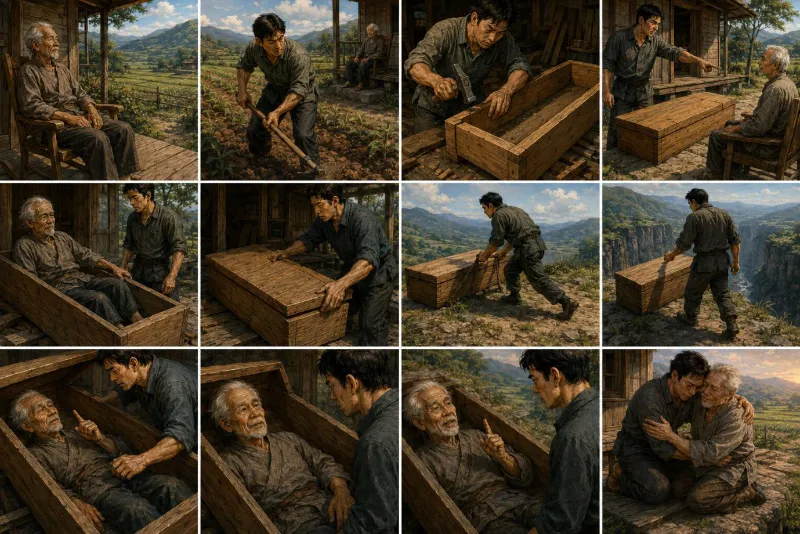
He went to the barn and gathered several sturdy wooden boards. With rough determination, he hammered them together into a simple coffin. When it was finished, he dragged the heavy box across the yard until it rested before the porch.
Looking at his father, he said coldly, “Get in.”
The old man said nothing.
Without complaint, without anger, and without fear, he slowly rose from his chair and stepped into the coffin. He lay down quietly, folding his hands over his chest.
The son closed the lid and began dragging the coffin across the field toward the edge of the property, where a steep cliff overlooked a deep ravine.
The journey was long. The wooden box scraped against stones and roots, leaving a trail in the dirt. Inside, the old man remained calm and silent.
As the son approached the cliff, he suddenly heard a soft tapping from within the coffin.
Curious, he stopped and opened the lid.
His father looked up at him peacefully, his face gentle and composed.
“My son,” he said, “I understand what you intend to do.”
The son remained silent.
The old man continued, “If you wish to throw me over the cliff, I will not resist. But before you do, may I offer one suggestion?”
The son, puzzled, asked, “What is it?”
The father replied softly, “Throw me over if you must. But save this well-made wooden coffin.”
The son frowned. “Why should I save it?”
The old man met his eyes and said:
“Because one day, your own children may need it for you.”
The words struck the son like a bolt of lightning.
In that moment, he saw himself through his father’s eyes. He remembered the sacrifices his father had made, the wisdom he had shared, and the years of love and labour that had built the very farm on which he stood.
Most of all, he understood a profound truth:
The way we treat our parents becomes the example our children will follow.
Overcome with shame and sorrow, the son fell to his knees beside the coffin.
“Father, forgive me,” he cried.
The old man smiled gently.
The son helped his father out of the coffin and embraced him with tears in his eyes. Together, they returned to the farmhouse.
From that day forward, the son cared for his father with respect, gratitude, and love. And the old man continued to sit on the porch not as someone useless, but as a living reminder of the foundation upon which the family stood.
- Respect and honour your parents in their old age.
- Never forget the sacrifices made by those who raised you.
- The example you set for your children is the legacy you leave behind.
- What you do to your parents today may be done to you tomorrow.
As the saying goes: “We reap what we sow not only in the fields, but in our relationships.”
Source Credit: Google
Marathi :
एका शांत गावात, हिरव्यागार शेतांनी आणि मातीच्या वळणदार रस्त्यांनी वेढलेल्या परिसरात, एक कष्टाळू शेतकरी आपल्या कुटुंबासोबत राहत होता. अनेक वर्षे तो गावातील सर्वात मेहनती आणि प्रामाणिक माणूस म्हणून ओळखला जात होता. पहाटेपासून संध्याकाळपर्यंत तो शेत नांगरणे, बियाणे पेरणे, पिकांची देखभाल करणे आणि कापणी करणे अशा कामांत गुंतलेला असे.
त्याच्या अथक परिश्रमामुळे त्याने एक समृद्ध शेती उभी केली आणि आपल्या कुटुंबाला अन्न, निवारा आणि सुरक्षितता दिली. त्याने आपल्या मुलाला शेतीचे सर्व ज्ञान दिले हवामानाचा अंदाज कसा घ्यायचा, पेरणीची योग्य वेळ कोणती, जमिनीची काळजी कशी घ्यायची आणि प्रामाणिक परिश्रमाचे महत्त्व काय.
काळ पुढे सरकत गेला आणि शेतकरी वृद्ध झाला. त्याचे केस पांढरे झाले, पाठ वाकली आणि एकेकाळी मजबूत असलेले हात थरथरू लागले. पूर्वी सहज करता येणारी कामे कठीण झाली आणि अखेर तो शेतात काम करण्यास असमर्थ झाला.
दररोज सकाळी त्याचा मुलगा शेतीची जबाबदारी सांभाळत असे, तर वृद्ध शेतकरी घराच्या ओसरीवर शांतपणे बसून राहत असे. त्याने आयुष्यभर जपलेल्या शेतांकडे पाहत तो भूतकाळाच्या आठवणींमध्ये रमून जात असे.
मुलगा शेतात काम करत असताना वेळोवेळी वडिलांकडे पाहत असे. प्रत्येक वेळी त्याला ते नुसते बसलेले दिसत.
सुरुवातीला त्याला वडिलांची दया वाटली. पण हळूहळू त्या दयेचे रूपांतर नाराजीमध्ये झाले.
तो मनात म्हणू लागला, “बाबा दिवसभर फक्त बसून असतात. ते आता कोणतेही काम करत नाहीत. त्यांचा काहीच उपयोग उरलेला नाही.”
ही भावना दिवसेंदिवस वाढत गेली. त्याने वडिलांनी आयुष्यभर केलेले कष्ट आणि त्याग विसरून टाकले.
एके दिवशी, रागाच्या भरात त्याने गोठ्यातून मजबूत लाकडी फळ्या आणल्या आणि त्यापासून एक साधी शवपेटी तयार केली. ती ओढत तो ओसरीपर्यंत घेऊन आला आणि वडिलांना कठोर आवाजात म्हणाला,
“यात झोपा.”
वृद्ध वडिलांनी काहीही न बोलता शांतपणे उठून शवपेटीत प्रवेश केला आणि हात छातीवर ठेवून निजले.
मुलाने झाकण बंद केले आणि ती शवपेटी शेताच्या टोकाला असलेल्या उंच कड्याकडे ओढत नेऊ लागला.
कड्याजवळ पोहोचताच त्याला आतून हलक्या टकटक करण्याचा आवाज आला. त्याने झाकण उघडले.
वडील शांतपणे त्याच्याकडे पाहत म्हणाले,
“बाळा, मला माहीत आहे की तू मला या कड्यावरून खाली ढकलणार आहेस. पण त्याआधी मी तुला एक सल्ला देऊ का?”
मुलगा थोडा गोंधळला आणि म्हणाला,
“काय सल्ला?”
वडील शांत स्वरात म्हणाले,
“मला खाली ढकलायचे असेल तर ढकल. पण ही चांगली लाकडी शवपेटी जपून ठेव.”
मुलाने आश्चर्याने विचारले,
“ती कशासाठी?”
वडील त्याच्या डोळ्यांत पाहत म्हणाले,
“कारण एक दिवस तुझी मुलेही तुझ्यासाठी हिचा उपयोग करू शकतील.”
हे शब्द ऐकताच मुलाच्या हृदयाला जबरदस्त धक्का बसला.
क्षणात त्याला आपल्या चुकीची जाणीव झाली. वडिलांनी केलेले कष्ट, त्याग आणि प्रेम त्याच्या डोळ्यांसमोर उभे राहिले. आणि त्याला एक मोठा जीवनसत्य उमगला
आपण आपल्या आई-वडिलांशी जसे वागतो, तसेच वागणे आपली मुले आपल्याकडून शिकतात.
लाज आणि पश्चात्तापाने त्याचे डोळे भरून आले. तो वडिलांच्या पायाशी बसला आणि म्हणाला,
“बाबा, मला माफ करा.”
वडिलांनी प्रेमाने त्याच्याकडे पाहिले.
मुलाने त्यांना शवपेटीतून बाहेर काढले आणि दोघेही हळूहळू घराकडे परतले.
त्या दिवसानंतर मुलाने आपल्या वडिलांची आदराने, कृतज्ञतेने आणि प्रेमाने सेवा केली. आणि वृद्ध वडील पुन्हा ओसरीवर बसू लागले निरुपयोगी म्हणून नव्हे, तर त्या कुटुंबाचा खरा पाया म्हणून.
- वृद्ध आई-वडिलांचा आदर करा.
- त्यांनी केलेले त्याग कधीही विसरू नका.
- आपल्या मुलांसाठी आपणच आदर्श असतो.
- आज तुम्ही तुमच्या पालकांशी जसे वागाल, उद्या तुमची मुले तुमच्याशी तसेच वागतील.
“जसे पेराल तसे उगवेल हे केवळ शेतीतच नव्हे, तर नातेसंबंधांमध्येही तितकेच खरे आहे.”
Source Credit: गूगल